Hit enter to search or ESC to close
31 March 2026
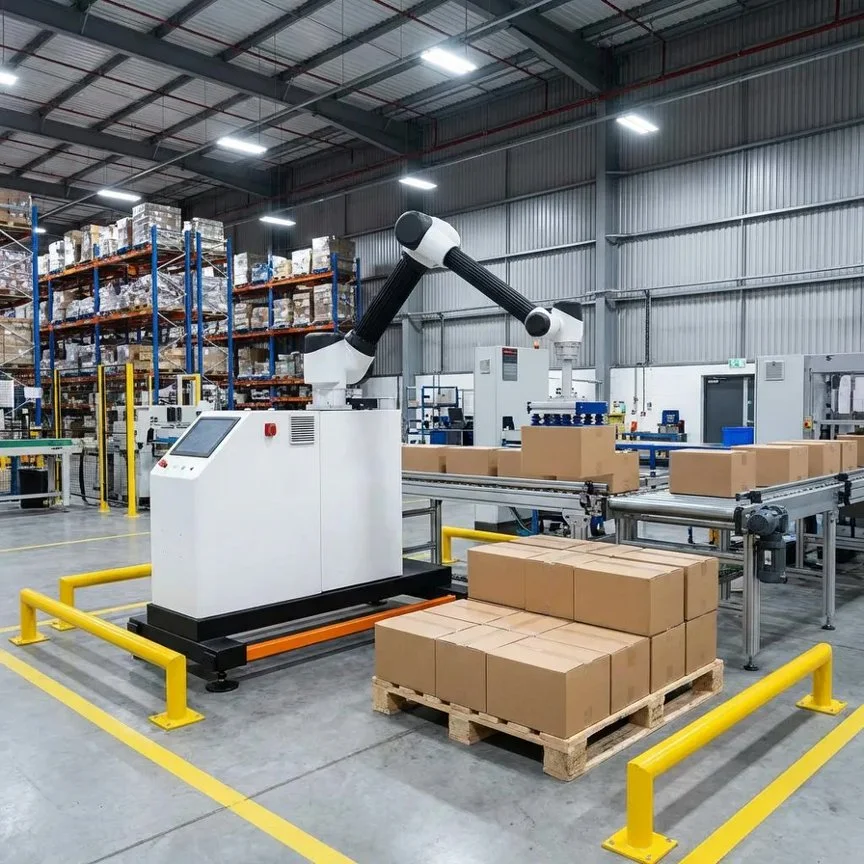
A cobot palletizer is an end-of-line automation system that uses a collaborative robot to pick cartons, boxes, bags, or cases and stack them onto pallets. It is typically easier to install, more compact, and more flexible than a traditional palletizing system, making it a strong option for small and medium-sized factories.
What Is a Cobot Palletizer?
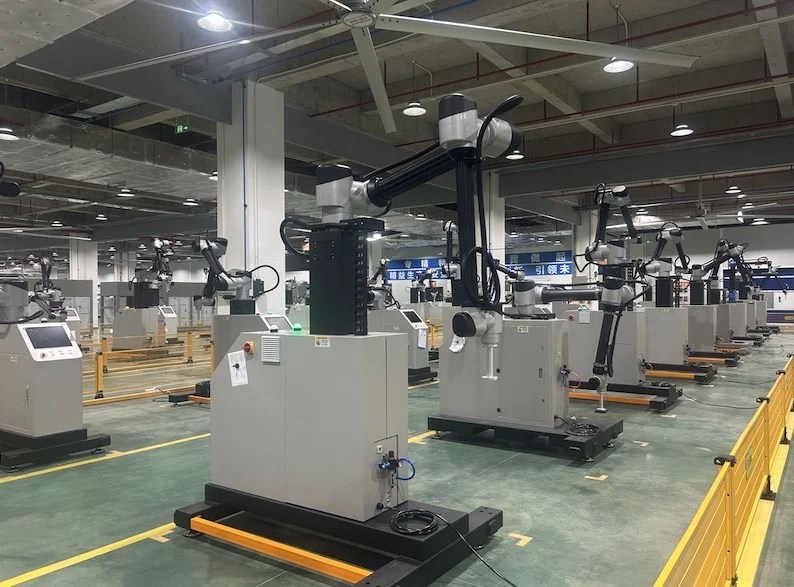
A cobot palletizer is an automated palletizing system built around a collaborative robot, or cobot. Its task is to pick finished products and stack them neatly onto a pallet at the end of a production or packaging line.
Compared with traditional palletizing systems, cobot palletizers are usually easier to install, simpler to operate, and better suited to factories that need flexible automation without a very large footprint or high initial investment.
Typical products handled
· Cartons and boxes
· Bags and cases
· Wrapped packages
· Regular-shaped consumer goods packaging
Common industries
· Food and beverage
· Pharmaceuticals and healthcare
· FMCG and daily chemical products
· Warehousing and logistics
· Building materials and industrial packaging
How Does a Cobot Palletizer Work?
A cobot palletizer follows a repeatable process to move products from a conveyor or transfer point onto a pallet in a stable stacking pattern.
Step | What happens |
1. Product arrival | Finished cartons or packages arrive from the conveyor to the pick position. |
2. Product detection | Sensors identify the product and confirm its position. |
3. Gripping | The robot uses a vacuum gripper, clamp gripper, or another suitable tool to pick up the product. |
4. Transfer | The robot moves the product from the pick point to the pallet area. |
5. Placement | The product is placed onto the pallet according to a programmed stacking layout. |
6. Repeat cycle | The robot repeats the cycle automatically until the pallet is complete. |
Main Components of a Cobot Palletizer
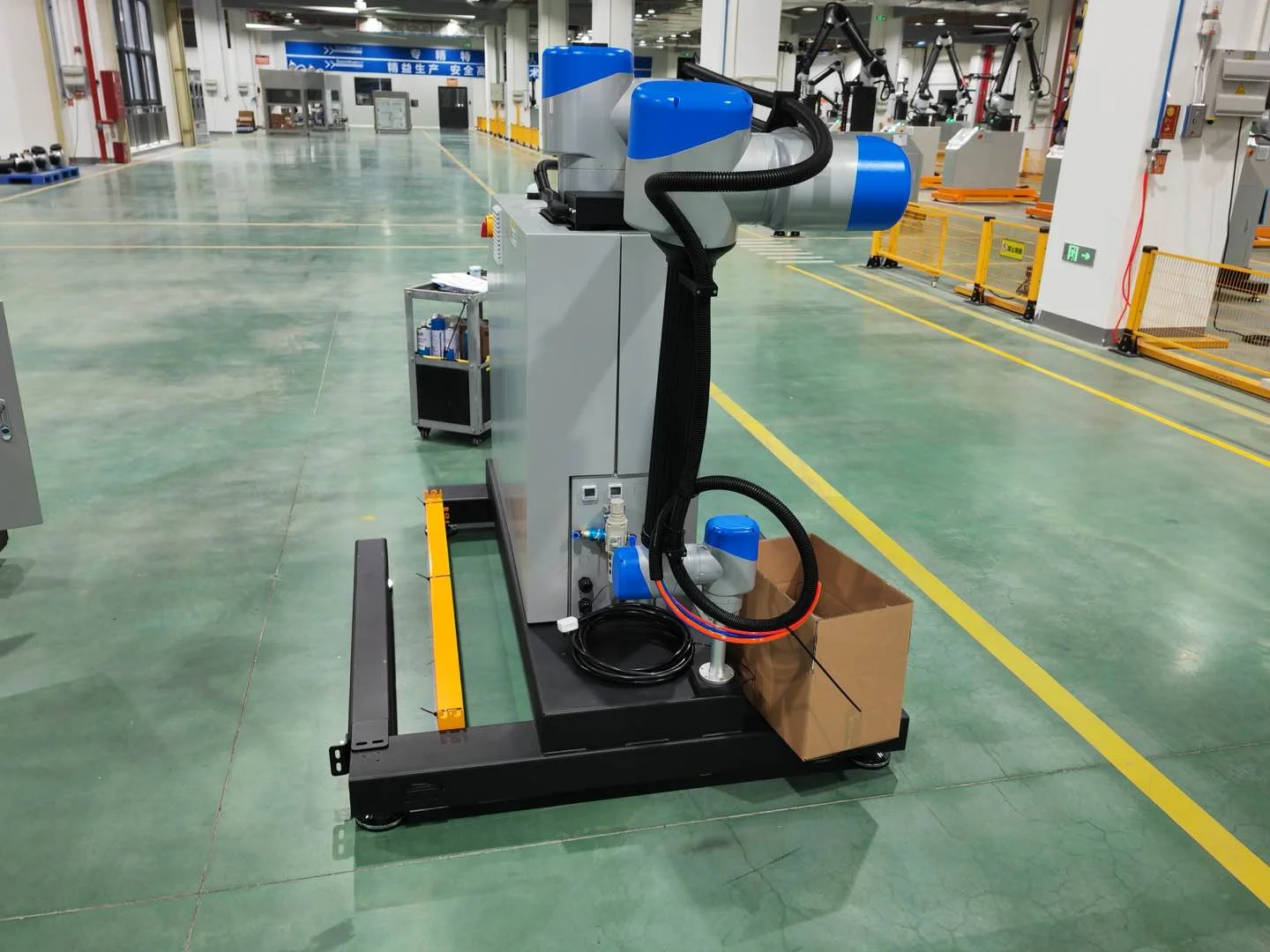
Collaborative robot arm: The main moving unit that handles picking and stacking.
Gripper: The end-of-arm tool, such as a vacuum, clamp, or fork-style gripper.
Conveyor system: Brings finished products to the palletizing position.
Pallet station: The area where the robot builds the pallet load.
Sensors: Detect product position, pallet status, and work conditions.
Control system: Manages robot motion, recipes, and stacking patterns.
Safety devices: Emergency stops, laser scanners, or safety sensors to protect operators and equipment.
Main Benefits
· Reduced labor cost - A cobot palletizer reduces repetitive manual lifting and can help solve labor shortage problems.
· Improved efficiency - The robot can work with stable performance and repeatable cycle times.
· Better workplace safety - Automation reduces operator fatigue and the risk of lifting-related injuries.
· Compact footprint - Cobot systems are often smaller than traditional palletizing cells.
· Easy operation - Modern systems are designed with simpler interfaces and faster changeover.
· Flexible application - They can often handle different product sizes and pallet patterns.
Cobot Palletizer vs Traditional Palletizer
A cobot palletizer is not intended to replace every type of traditional palletizer. Instead, it is often the better choice when flexibility, ease of use, and lower investment matter more than maximum speed.
Aspect | Cobot palletizer | Traditional palletizer |
Best for | Small and medium factories, flexible production, moderate speed | High-volume lines, heavy-duty applications |
Footprint | Usually compact | Usually larger |
Operation | Generally easier to learn | Often more complex |
Investment | Lower to medium | Medium to high |
Changeover | Usually faster and more flexible | Can be less flexible |
Who Should Use a Cobot Palletizer?
· Factories still using manual palletizing
· Companies that want to reduce labor cost
· Plants with labor shortages or hard-to-fill end-of-line jobs
· Manufacturers that need a practical, cost-effective automation project
· Businesses with limited floor space or multiple product SKUs
Is a Cobot Palletizer Easy to Integrate?
Yes. One of the key reasons cobot palletizers are becoming more popular is that they are usually easier to integrate than traditional robotic palletizing systems. They can often be added to existing packaging lines, carton handling lines, or warehouse packing stations with less complexity.
This makes them a practical solution for manufacturers that want to start with one automation project and expand later.
Conclusion
A cobot palletizer is a smart and cost-effective way to automate palletizing work. It uses a collaborative robot to pick products and place them on pallets accurately, consistently, and efficiently.
For factories that want to reduce manual labor, improve safety, and increase productivity, a cobot palletizer can be an excellent investment. It is especially suitable for small and medium-sized manufacturers looking for flexible end-of-line automation.
Call to Action
If your factory is still using manual palletizing, now may be the right time to consider a cobot palletizing solution. Contact us with your product size, weight, speed requirement, and pallet dimensions, and we can recommend a suitable palletizing configuration for your line.