Hit enter to search or ESC to close
2 April 2026
Top Benefits of Using a Cobot Palletizer in Packaging Lines
Why Packaging Lines Are Replacing Manual Palletizing
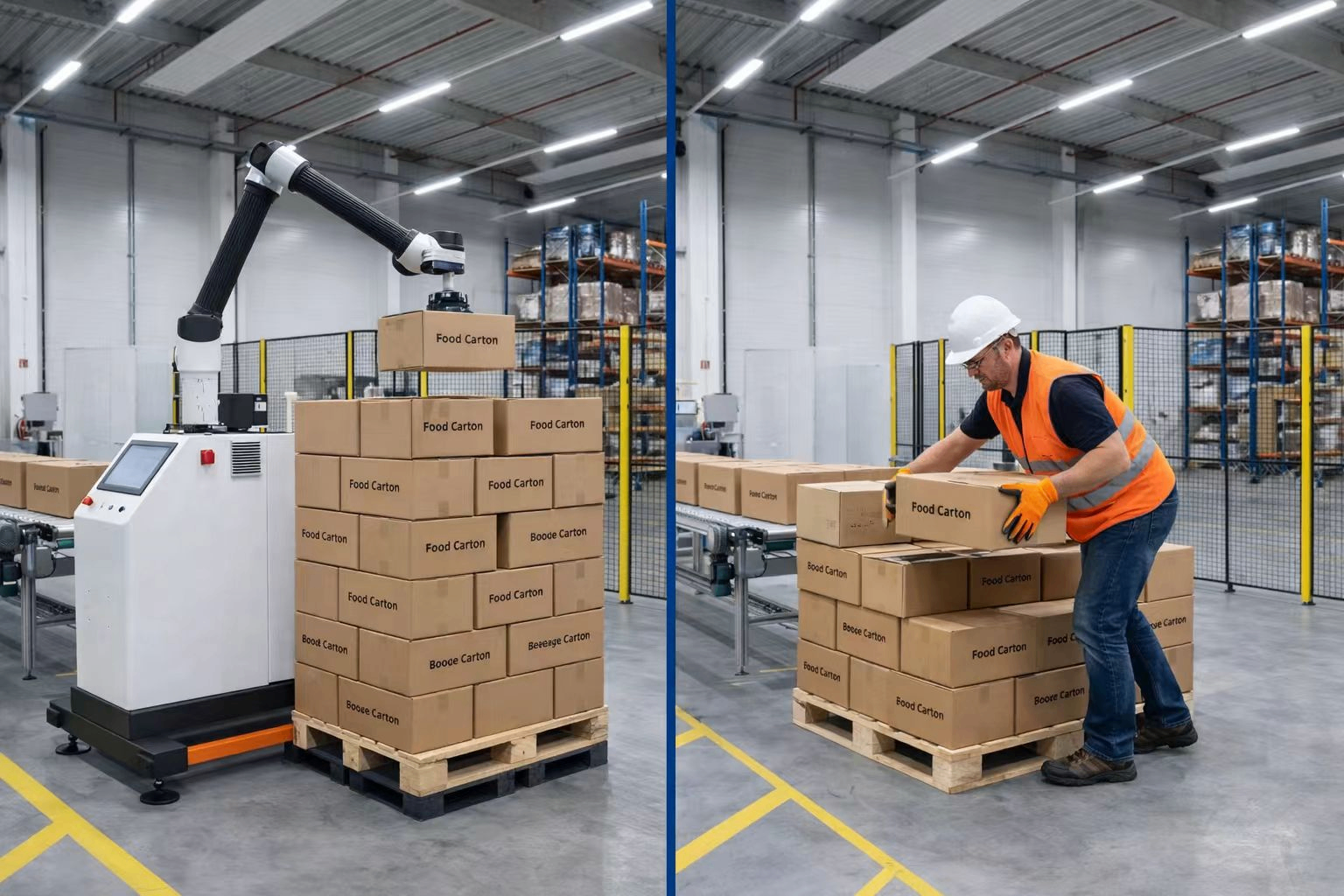
In many plants, palletizing remains one of the most repetitive tasks at the end of the line. It creates pressure on staffing, throughput consistency, and ergonomics.
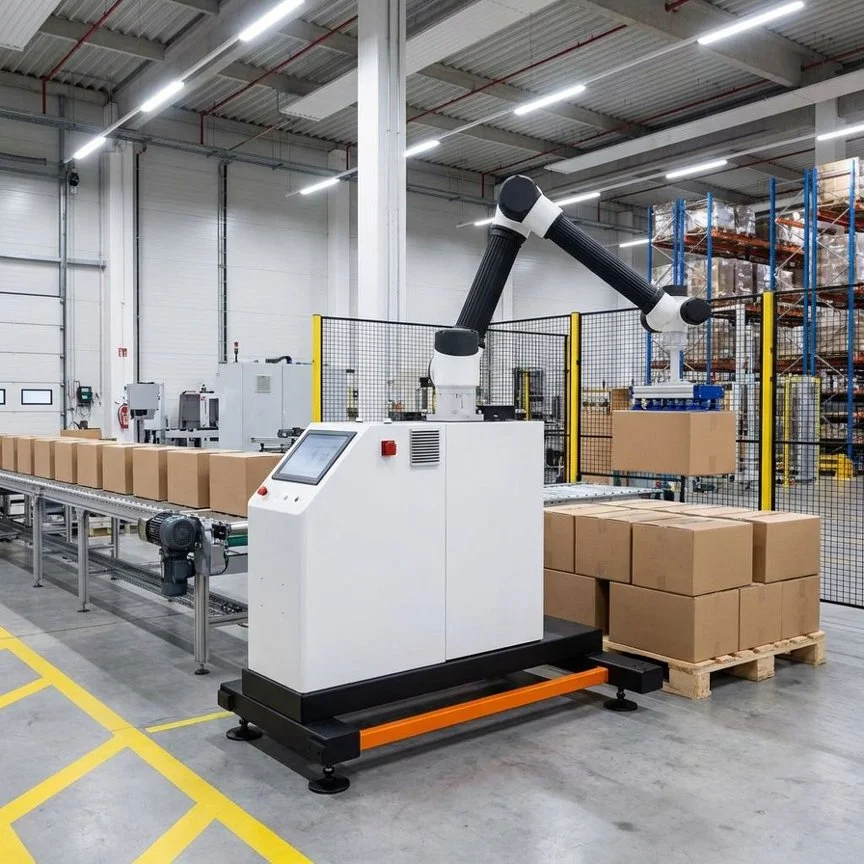
That is why more manufacturers are evaluating cobot palletizing as a practical way to automate a labor-intensive process without moving directly to a large conventional palletizing cell.
Seven Business Benefits of Cobot Palletizing in Packaging Lines
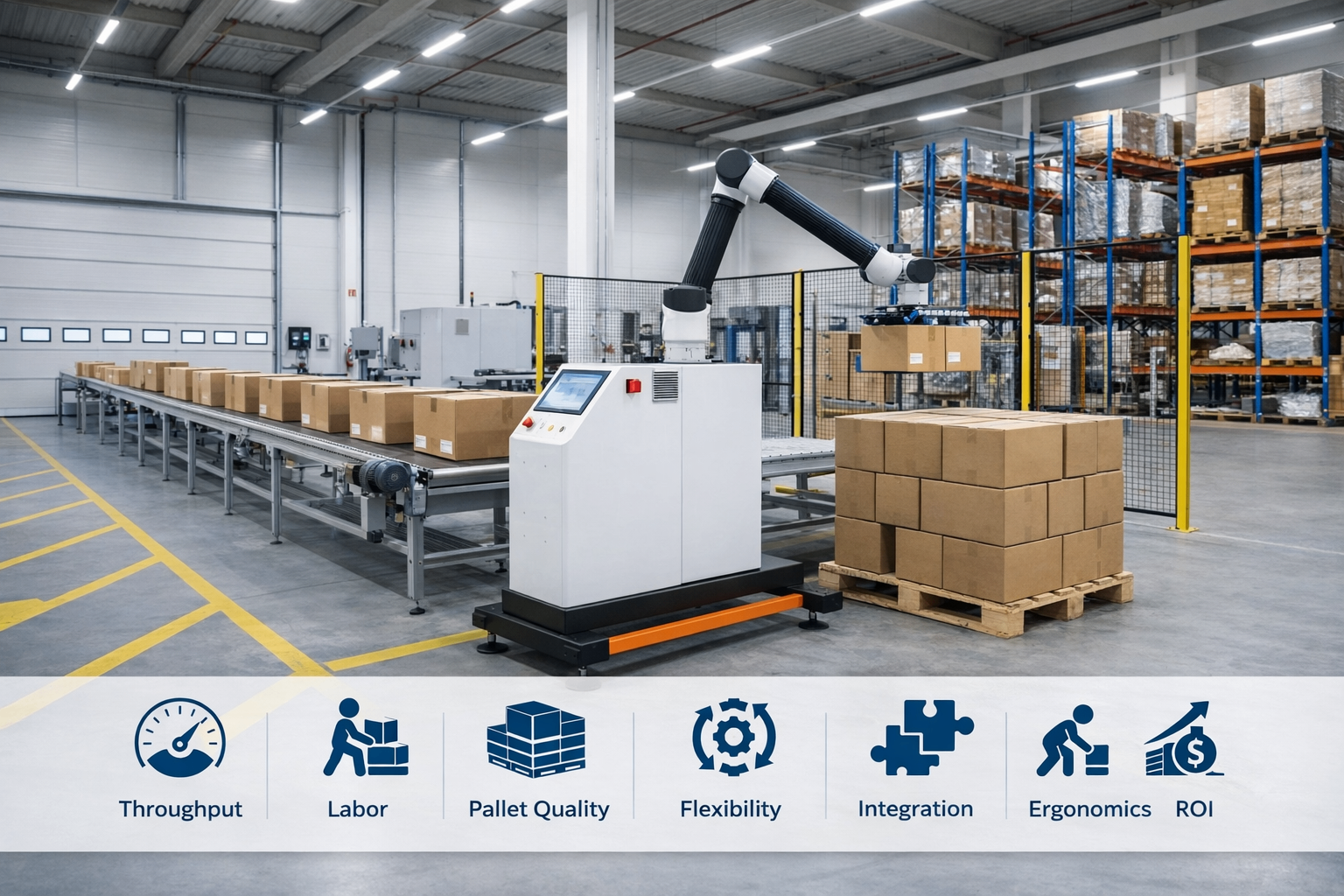
1. Maintain End-of-Line Throughput
When palletizing slows down, upstream equipment keeps producing. That mismatch creates congestion, rehandling, and avoidable line interruptions.
A more stable palletizing stage helps protect the performance of cartoners, case packers, sealers, labelers, and conveyors that feed it.
2. Reduce Exposure to Manual Labor Constraints
Cobot palletizing reduces dependence on a repetitive position that is often difficult to recruit, train, and retain.
For manufacturers, this supports manpower planning, production continuity, and better total cost of ownership.
3. Improve Pallet Consistency and Load Stability
More consistent stacking supports cleaner pallet patterns, smoother warehouse handling, and more shipment-ready loads.
In export-oriented operations, this helps improve wrapping quality, storage stability, and downstream handling performance.
4. Adapt Faster to SKU and Packaging Changes
Packaging lines often run multiple case sizes, pallet dimensions, heights, and patterns.
A cobot palletizer is well suited to environments where changeovers, SKU variety, and mixed-format production are part of normal daily operation.
5. Integrate Automation Without Rebuilding the Line
Many plants delay palletizing automation because they worry about disruption, layout conflicts, and implementation complexity.
A compact, deployment-friendly palletizing cell lowers that barrier and makes automation easier to evaluate within an existing packaging line.
6. Improve Ergonomics in Repetitive Handling Areas
Palletizing is one of the most repetitive, injury-prone tasks in many facilities.
Reducing repeated lifting, bending, and twisting helps improve day-to-day working conditions and supports a safer handling environment.
7. Build a Stronger ROI Case for Automation
The strongest ROI case usually comes from several gains at once: lower labor exposure, better throughput control, more consistent pallet quality, and easier deployment.
Buyers approve palletizing automation more easily when the business case is tied to operating impact rather than hardware alone.
Where Cobot Palletizers Fit Best
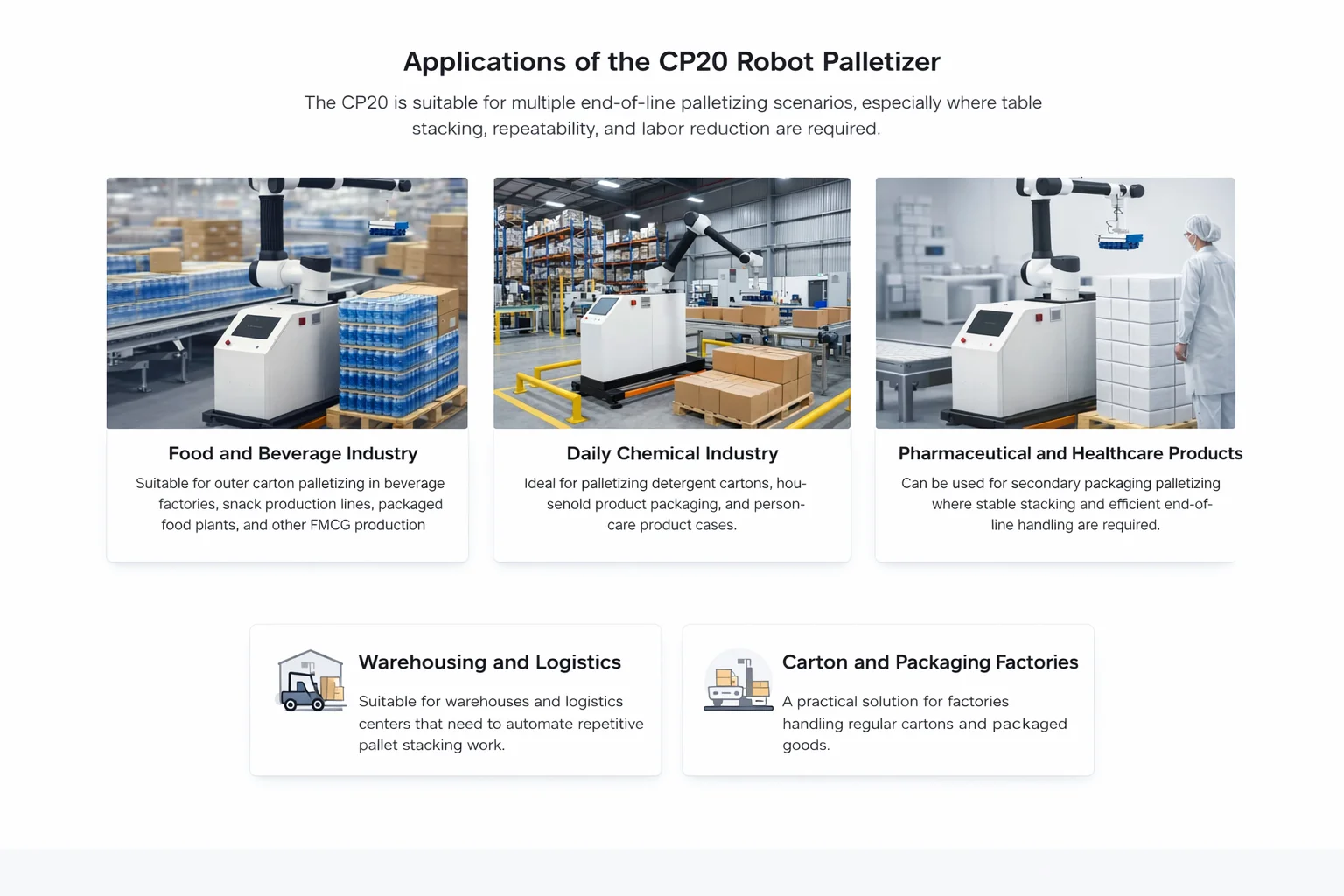
Application environment | Why cobot palletizing fits |
Food and beverage packaging | Repetitive case handling and line-end pallet buildup. |
Household and daily chemical products | Mixed case formats and steady output requirements. |
Pharmaceutical secondary packaging | Clean, repeatable end-of-line handling. |
Contract packing and co-manufacturing | SKU changes and layout adaptability. |
Warehousing and logistics support lines | Repetitive pallet build tasks and load consistency. |
What Buyers Should Evaluate Before Sending an RFQ
RFQ item | Why it matters |
Product dimensions | Determine gripping and pattern feasibility. |
Product weight | Affects payload selection and cycle planning. |
Packaging type | Changes the gripping and stacking approach. |
Target throughput | Defines cycle expectations and cell design. |
Pallet size and pattern | Drives reach, layout, and final load structure. |
Available floor space | Affects cell footprint and integration feasibility. |
Site utilities | Supports quotation accuracy and commissioning planning. |
Required lead time | Impacts project scheduling and procurement planning. |
FAQ
Is cobot palletizing suitable for mixed-SKU packaging lines?
Yes. It is well suited to packaging environments that require flexible pallet patterns, adaptable changeovers, and handling for different case sizes.
Is a cobot palletizer only for large factories?
No. It is also suitable for small and medium-sized manufacturers that need a practical path into automation.
What is the most important reason buyers automate palletizing?
The most common reasons are maintaining throughput, reducing labor exposure, improving pallet consistency, and lowering ergonomic risk.
What should a buyer prepare before asking for quotation?
At minimum: product size, weight, packaging type, pallet size, target throughput, layout information, and project timeline.
Talk to Our Team About Your Packaging Line
If you are evaluating palletizing automation for cartons, cases, bags, or other regular packaged products, send your project details for a faster review.